
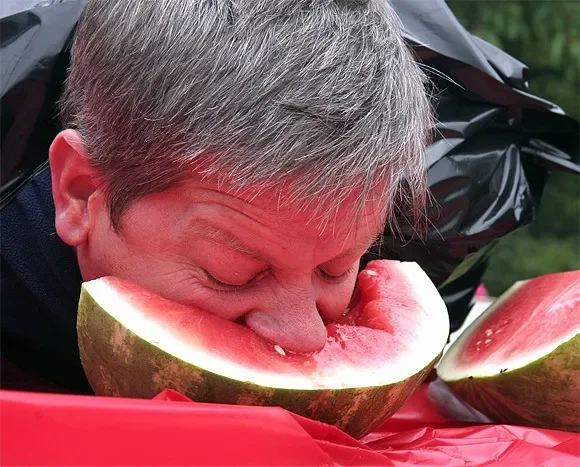
Seven Ways to Pick the Perfect Watermelon
It is the second week of July. You walk into the grocery store and the bin near the front is piled high with watermelons. You pick one up, turn it over in your hands, and have no real idea what you're looking for. You tap on it the way your father used to, but you can't remember what sound you're supposed to be listening for. You carry one home. Hope for the best.
Saturday afternoon, you cut it open. Pale pink flesh. Thick white rind. Watery, mealy, almost no taste. Six dollars in the compost.
There is no luck in picking a watermelon. There never was.
Lewis Bullard was the kind of man who built things meant to last and surrounded himself with people who knew their craft completely. He could walk up to a bin of melons and pick the sweetest one every single time. Not by luck. By knowledge. Seven simple tests. Learned young. Never forgotten.
Lewis Bullard's Watermelon Test
1. The Field Spot: Turn the watermelon over. Look for the spot where it rested on the ground. If it's white or missing entirely, put it down — it was picked too early. You want a large, creamy, butter-yellow patch. The bigger and deeper the yellow, the longer it ripened on the vine. This is the most important test.
2. The Sound Tap the belly with your knuckle. A ripe melon returns a deep, resonant thud. A hollow, high-pitched knock means it's overripe or underdeveloped. You're listening for fullness. You'll know it when you hear it.
3. The Webbing Look for brown, thread-like lines on the rind — the marks left by bees returning to the same sweet spot over and over during pollination. More webbing means the bees found it sweet. Trust the bees. They were there before us.
4. The Shape A symmetrical melon is a well-pollinated melon. Lumps, irregular bumps, or uneven ends mean the growth was interrupted somewhere. Pick the one that looks like it had a good season.
5. The Size Neither the biggest nor the smallest in the bin. The biggest are often overwatered; the smallest may not have finished ripening. Pick the one that surprises you with its weight when you lift it — heavy for its size means dense, ripe flesh.
6. The Tendril If you're at a farm stand where the stem is still attached, look at the small curling tendril nearest the melon on the vine. If it's green, the melon isn't ready. If it's dry and brown, it ripened fully and was picked at the right moment.
7. The Tail The dried stem end — the small stub where the melon was cut from the vine — should be dry and slightly indented. A moist, green tail means it was harvested too soon. A dry, woody tail means it had time.
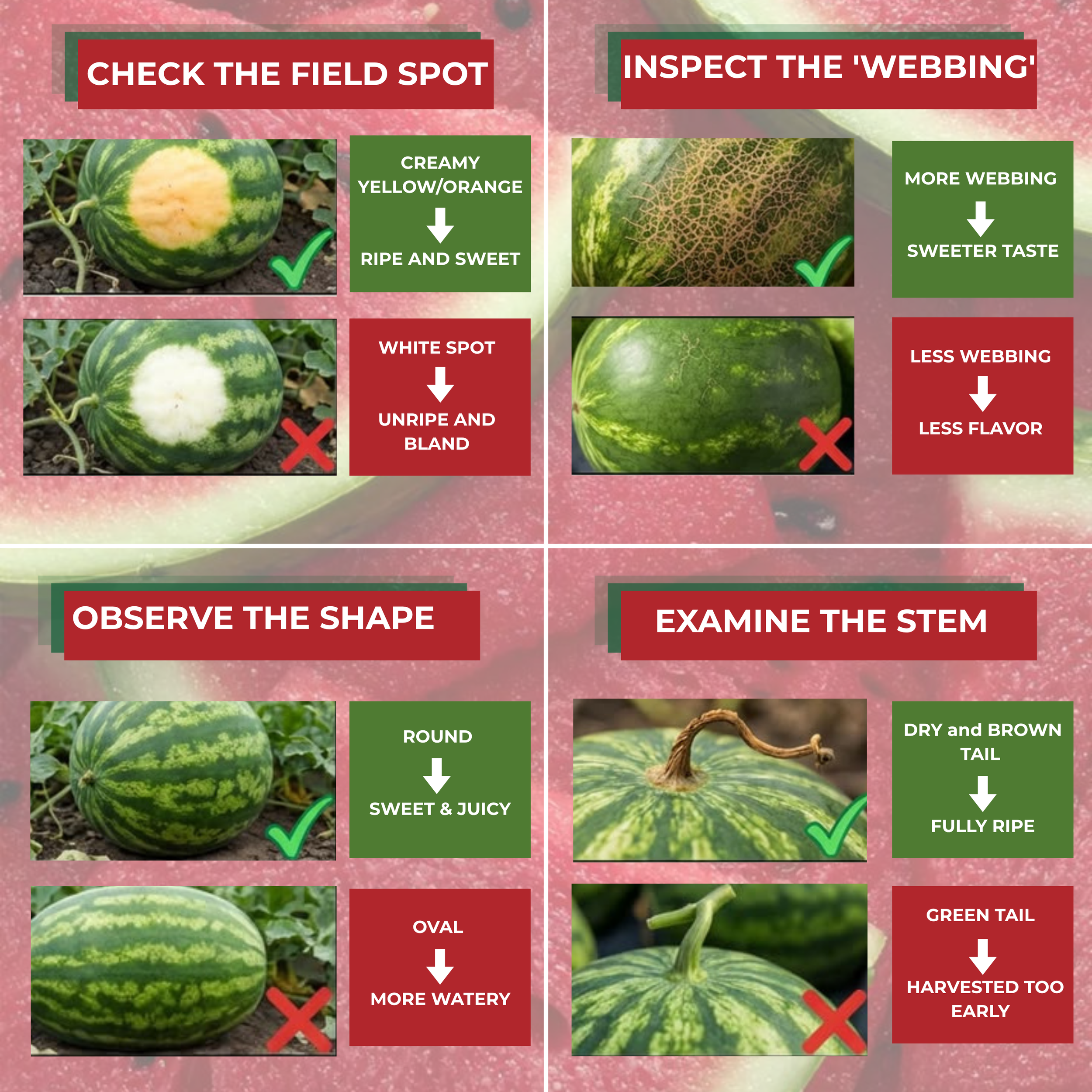
In ninety seconds at any farm stand or grocery store, you can run all seven tests. It's the kind of simple, practical wisdom that's easy to lose—but always worth passing on.
“Life is good! But it's even better with a good watermelon! ” – Lewis Bullard